
China holidays |
Search Site
|
 Book China Tours020 7487 2999sales@chinaholidays.co.uk |
Sichuan, Tibet and Yunnan

Unforgettable China travels with spellbinding scenery, age-old Buddhist temples and the daily traditions of minority people.
Tour Map

 bg
bg Victor Wang

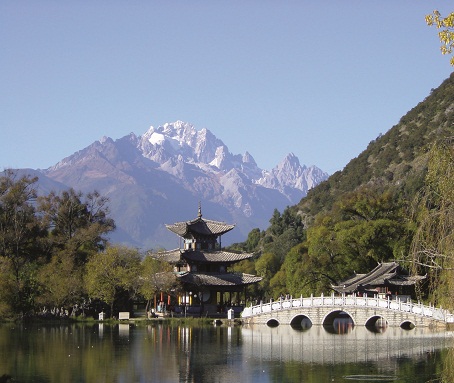
This China tour encompasses the most dramatically beautiful and culturally vibrant triangle of Sichuan, Tibet and Yunnan, where old trade routes through Asia connected ancient kingdoms of ethnic minorities otherwise isolated by geography.
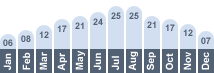
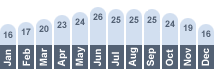
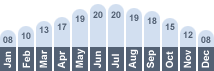
Weather on this Tour
-
Chengdu
-
Dali
-
Kunming
-
Lhasa
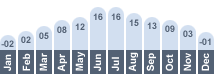
-
Lijiang
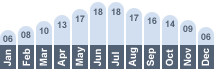
-
Shanghai
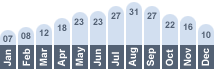
- Need help with
Chinese Visa? - See our range of
day tours in China. - Why book with
China Holidays?
Here’s what our
clients say ...
17 - day tour to Chengdu (2 nights), Lhasa (3 nights), Gyantze (1 night), Shigatze (1 night), Lhasa (1 night), Zhongdian-Shangri-la (2 nights), Lijiang (2 nights), Dali (1 night) and Kunming (2 nights)
Image Gallery
Sichuan, Tibet and Yunnan
-

Minority Villagers
-
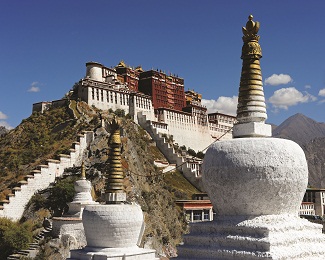
Potala Palace
-

Three Pagodas
-
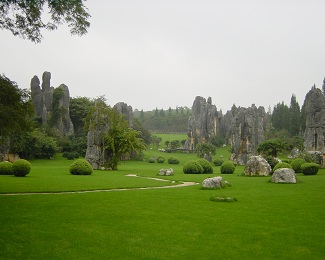
Stone Forest
-
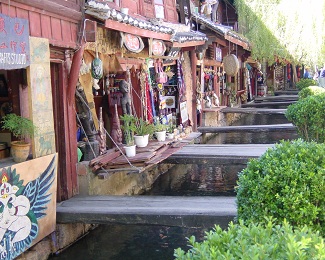
Lijiang Old Town
Minority Villagers
China Tour Full Itinerary
Key: B=Breakfast L=Lunch D=Dinner
Itinerary Highlights
- Meet Giant Pandas in Chengdu
- Tour the Potala Palace in Lhasa
- Visit the Stone Forest
- Admire Tiger Leaping Gorge
- Explore the old town of Lijiang
- Meet a local Tibetan family

020 7487 2999
- High Season from: £4395
- Mid Season from: £4295
- Low Season from: £4195
Day 1
London/Chengdu
You will take a scheduled flight from London Heathrow to Chengdu, Alternatively, we can arrange departures from your loal airport.
Day 2
Shanghai
Upon arrival, you will be met by your guide and transferred to your hotel for a 2-night stay at 5* Tibet Hotel Chengdu where you can relax and recovery from jetlag.
Day 3
Chengdu
Met at hotel lobby by your guide for starting the daily visit. Today, you wll get close to see one of the world's most adorable and endangered animals at the Panda Research Base which supports those Pandas living in the wild and also works on a sccessful breeding programme. Back to Cty, take a leisure stroll around Kuangzhai Lanes, lined with traditional houes decorated with intricate woodcarving andredlanterns, Later attend an intriguing andentertaining Sichuan "face-changing" Opera to see if you can sot how the performers swap their masks so quickly ! Drive back to your hotel after daily visit. BLD
Day 4
Chengdu / Lhasa
Fly to Lhasa to stay four nights at the 4* Minshan Hotel, the rest of the day is free to relax and acclimatise to Tibet's high altitudes at 12,000 ft above sea level and rising to 15,750ft later in the journey. B
Day 5
Lhasa
Visit one of the three great monasteries of Tibet, Drepung Monastery - a religious university were about 600 monks live and study, in its heyday before the Potola Palace was built, there were over 10,000 monks and it was the largest in the world. Later, follow the throngs of pilgrims as they make the clockwise circit along Barkhor Street that encrcles the golden-roofed Jokhang Temple, home to the most sacred Buddha statue for Tibetans. BLD
Day 6
Lhasa
425ft above the city on Red Mountain stands the fortress-like Potala Palace, 13 storeys high and with 1,000 rooms filled with statues, chapels, manuscripts and murals. Potala was the winter palace of Dalai Lamas and Tibet's political and spiritual headquarters for centuries, and later you will visit the Summer palace -- Norbulingka, a complex of delightful pavilions and gardens outside the city. Finally, go to visit the 15th century Sera Monastery and its Great Assembly Hall, dormitories and colleges where 10,000 monks used to live. BLD
Day 7
Lhasa / Gyantz
Leave Lhasa and drive along the Southern Friendship Highway in the direction of Kathmandu, over the Kampa La Mountain Pass to Yamdrok Lake, the sacred "Holy Sapphire" and femal guardian of Busshism in Tibet. Continue past the Karo La Glacier to the small town of Gyantze and stay over night at the 3* Gyantze Hotel. BLD
Day 8
Gyantze / Shigatze
This morning visit Palkhor Chode Monastery and its nine-storey pyramid-like structure know as a Kumbum with 76 chapels lined with lavish murals. Continue to Shigaze to stay at the 4* Qomo Langzong Hotel for two nights. BLD
Day 9
Shigatze / Lhasa
Visit the Tashilhungpo Monastery, founded by the first Dalai Lama in the 15th century and traditional seat of his second-in-command, the Pacnchen Lama, ever since. See the jewel-encrusted tomb ofthe tragic 10th Panchen Lama, the 86ft-high Maitreys Buddha Statue, murals and immense Thangka Wall. Drive back to Lhasa, "the Ground ofthe Gods", through rugged scenery along the Northern Friendship Highway for a final night in Tibet.. BLD
Day 10
Lhasa / Zhongdian
Fly to Zhongdan in the north-west of Cina's Yunnan Province, a photogenic town perched on a Himalayan Plateau andonce a staging post on the Southern Silk Road fown to Vietnam. It was renamed Shangri-La a few years ago due to its natural beauty, and we stay two nights in this "fabled paradise" at the 4* Blue Horizon Jun Hua Hote. B
Day 11
Zhongdian ( Shangri-La)
Visit Songzanlin Monastery, dating from the 16th century and rebuld following damage during the 1959. Drive out to Napa Lakes, it is located eight Kilometers northwest of the county. Several rivers flow into the lake , including the Naizi and Naqu Rivers. The lake is seasonal in that it is dry in the fall and winter seasons, naturally becoming part of the Yila Prairle. During this time, visitors can see many sheep and cows grazing in the lake bed. Visit one of these to meet a local Tibetan family and enjoy a hearty home-cooked dinner. BLD
Day 12
Zhongdian / Lijiang
Drive south to jiang, once the capital of the Naxi Kingdom, en-route admiring the world's deepest canyon at Tiger Leaping Gorge where the Yangtze is forced through a narrow gap in the rocks. Afterwards the guide will accompany you to explore Lijiang Old Town. You are able to sght-see time-honored residential compounds, soak in the romantic culturei n the famous bar street, and also hunt for loca sancks at Sifang Street. Stay twoo nights at 4*Ljiang Wangfu Hotel. BL
Day 13
Lijiang
After breakfast, vist the loca beauty spots Black Dragon Pool. And then will take a cable car ride up sacred Jade Dragon Snow Mountain and the southern most glacier in the northern hemisphere, and explore Lijiang's quaint old town with its354 bridges and elaborately carved Naxi houses. You will als enjoy the splendid sow , the Impression Lijiang, performed on an open-air stage against the snow mountain. BL
Day 14
Lijiang / Dali
Drive south through the green, rural lands of the Bai people and pass Erhai Lake to Dali. Stay at the 4* Landscape Hotel for an overnight . See the elegant, thousand -year-old towers of the Song Dynasty Three Pagodas and the exotic Catholic Church, and shop in the pleasant old quarter of Dali Town. BLD
Day 15
Dali / Kunming
You will take fast train to Kunming, the capital of Yunnan and staging post along the old trading route to neighbouring Burma, part of the southern Silk Road, and stay two nights at the 4* Jinjiang Hotel. On arrival, visit the Western Hills that locals say resemble a beautiful girl reclining on the banks of Dianchi Lake. BL
Day 16
Kunming
Today visit the extraordinary Stone Forest, an iconic UNESCO World Heritage Site, a hundred square miles of thin, jagged limestone pillars in fantastic shapes tat resemble a forest viewed from a distance, followed by the visit to the Tang Dynasty Bamboo Temple. BL
Day 17
Kunming / London
You wll be transferred to the Airport for your flight back to London Heathrow. B
Key:
B = Breakfast , L = Lunch, D = Dinner
Tour Departure Dates - Sichuan, Tibet and Yunnan
Want More from this China Tour ?
Holiday Extension
At the end of this tour to Sichuan, Tibet and Yunnan take a high speed train to the delightful town of Hangzhou to enjoy a cruise on the scenic West Lake, a visit to a traditional pharmacy and exquisite manor house and gardens, and a stroll along a quaint old street lined with picturesque houses. The perfect end to your China travels!
£ 395 per person twin shared.
Tailor-make this China Tour
If you would like to make this into a private tour just for you and your partner, friends or family , enjoying the benefit of travelling with your own chauffeur and English speaking guide and choosing your own departure date, please call and ask our tailor-made team on 020 7487 2999 to make arrangements for your travels in China.
£ 95 per person twin shared.
Want More Information About China Holidays ?
Brochure Request
Call Us

If you would like us to help you create the perfect China Holiday then please call us on:
020 7487 2999 |
|
 |
 |
|
 |
4 Glentworth Street London - NW1 5PG |
英国旅游地接服务请点击
Enquiry Form
Popular China Tours |
Featured Articles |
Other Information |
|
|
||
