
China holidays |
Search Site
|
 Book China Tours020 7487 2999sales@chinaholidays.co.uk |
Xi'an Tours, China

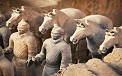
 "Who can forget the faces of the individual soldiers in the Terracotta Army? Each of the 6,000 statues is said to be different"
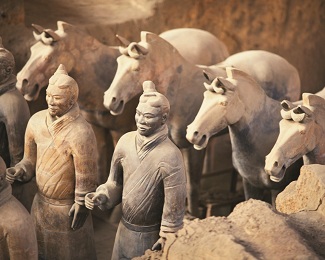
Xi'an Tours
There is more to Xi'an than just the Terracotta Warriors, although this is rightly considered the Eighth Wonder of the World. Built over two thousand years ago, more than six thousand life-sized terracotta warriors and horses were unearthed in1974 in a village near Xi'an. Up to now, three burial pits have been excavated. In No.1 pit, there are many life-size terracotta warriors and horses. The No.2 pit contains a combination formation of infantry, cavalry and soldiers on chariots, while the No.3 pit is the headquarters of the underground armies.
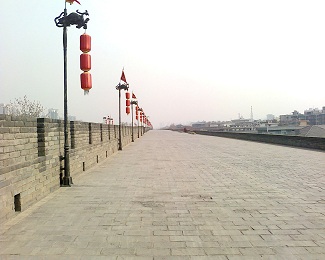
City Wall The old City Wall was built on the foundations of the walls of the Tang Dynasty (618–907). The wall was built of an earth foundation formed of layer upon layer of earth and quick lime and glutinous rice extracts trampled together. This made the wall extremely strong and is one reason why it is one of the few ancient city walls still visible in China. Climbing to the top of the City Wall you will have a bird’s eye view of the city.
Big Wild Goose Pagoda The five storey pagoda is located in the Thanksgiving Temple (ancient royal temple) and was built in 648AD during the Tang Dynasty (618-907). It is a very impressive, fortress-like, wood and brick building. The Wild Goose Pagoda was built to house the Buddhist scriptures that were brought back by XuanZang, a famous monk who translated them into 1335 Chinese volumes.
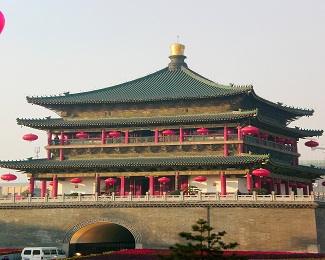
Bell Tower and rebuilt Drum Tower are located in the Xi'an city centre - the bronze bell sounded the opening the city gates each morning and the drum tower sounded the evening curfew. Therefore, it has a Chinese phrase ‘morning bell and the dusk drum'.
Hot Springs of Hua Qing Huaqing Hot Spring is located about 30 kilometres east of Xi'an. It was built in the Tang Dynasty (618 - 907), and became famous on account of its being the favourite bath place of Yang Guifei, the favourite concubine of Emperor Xuanzong (712 - 742).

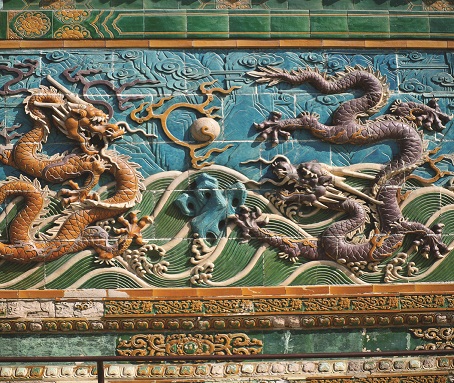
The Land of Nine Dragons
15 days tour - Beijing, Xian, Chengdu, Yangtze Cruise, Shanghai, Suzhou and Beijing from £2195.
Taste of China
11 days tour - Beijing, Xian, Guilin, Yangshuo and Shanghai from £1985.
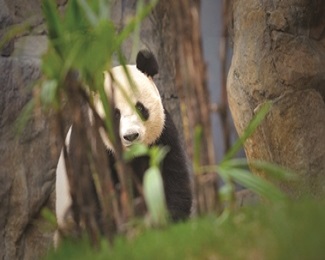
Panda, Palaces and Pagodas
22 days - Beijing, Xian, Hangzhou, Suzhou, Shanghai, Yangtze Cruise, Chengdu, Guilin, Yangshuo and Beijing from £2895.

The Silk Road
22 days to Beijing, Urumqi, Kashgar, Hotan, Aksu, Kuqa, Korla, Turpan, overnight train, Dunhuang, overnight train, Xiahe, Xian 2 and Beijing from £3985.


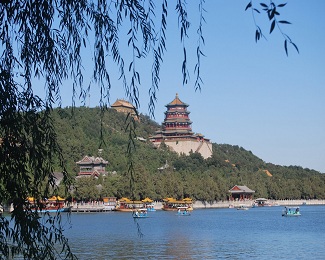
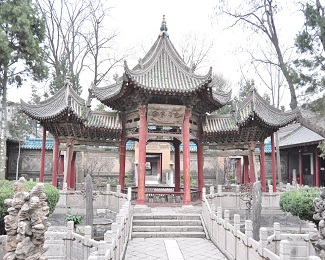
Image Gallery Xi'an
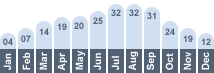
Weather in Xi'an
Want More Information About China Holidays ?
Brochure Request
Call Us

If you would like us to help you create the perfect China Holiday then please call us on:
020 7487 2999 |
|
 |
 |
|
 |
4 Glentworth Street London - NW1 5PG |
英国旅游地接服务请点击
Enquiry Form
Popular China Tours |
Featured Articles |
Other Information |
|
|
||
